

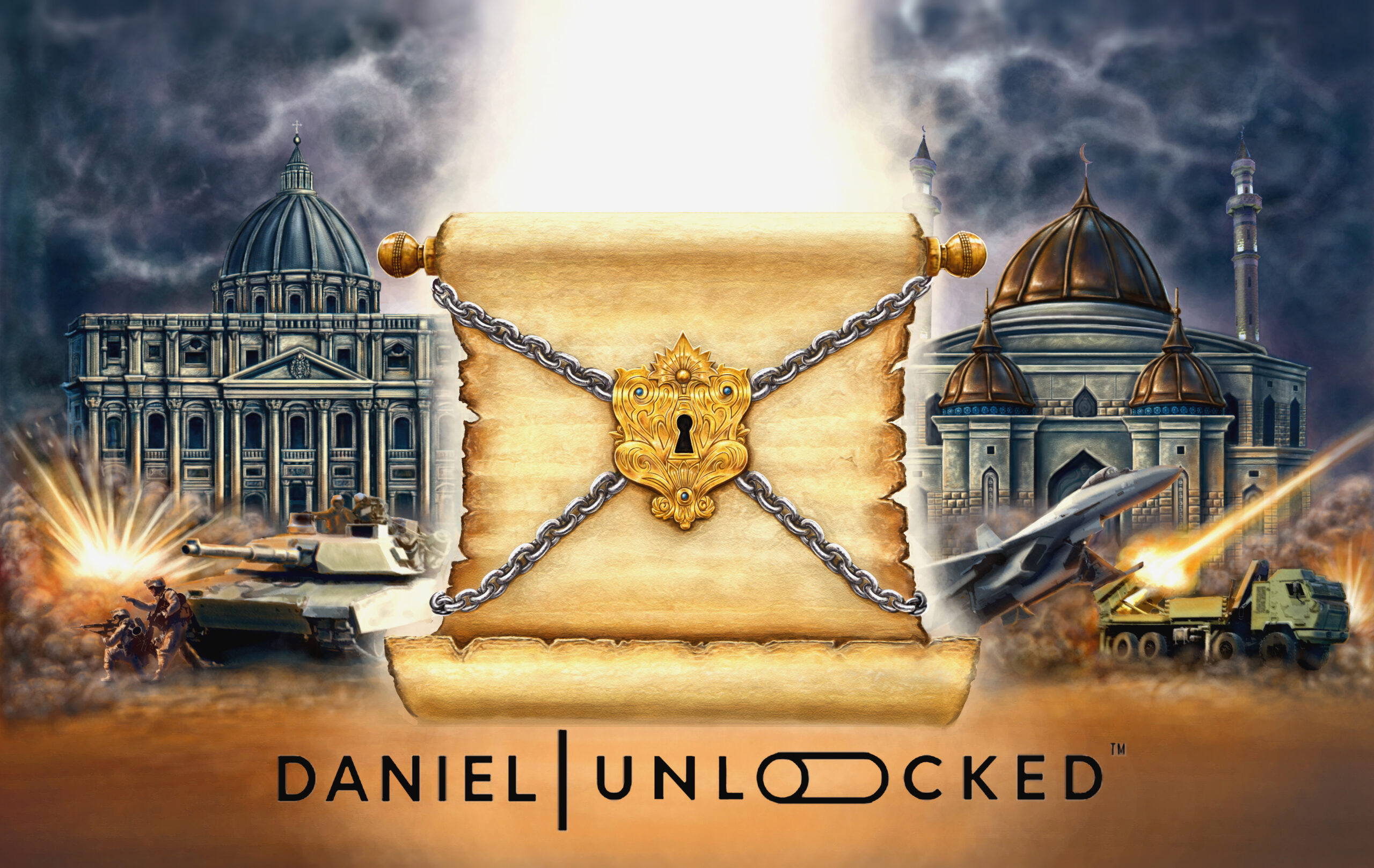
Daniel Unlocked #76. The King of the North and the King of the South.
Daniel 11 is undoubtedly the most difficult chapter in the book. However, the overall contours of the prophecy stand out clearly. God’s people will be persecuted and attacked, but in the end, God wins. In this chapter, attention is given to the great war between the powers of the north and south and the picture of the final events that concludes the chapter.
As we begin this challenging chapter, a few points should be made at the outset. First, Daniel 11 stands in parallel overall with the previous prophetic outlines in Daniel. As in chapters 2, 7, 8, and 9, the prophetic message extends from the days of the prophet to the end of time. Second, a succession of world powers emerges, powers that often oppress God’s people. Third, each prophetic outline climaxes with a happy ending. In Daniel 2, the stone obliterates the statue; in Daniel 7, the Son of man receives the kingdom; and in Daniel 8 and 9, the heavenly sanctuary is cleansed through the work of the Messiah. Chapter 11 follows three basic points. First, it begins with the Persian kings and discusses their fates. It proceeds right up to the time of the end, when the king of the north attacks the holy mountain of God.
Second, a succession of battles between the king of the north and that of the south and how they affect God’s people is described. Third, it concludes with a happy ending as the king of the North faces his demise by the “glorious holy mountain” (Dan. 11:45).
Such a positive conclusion signals the end of evil and the establishment of God’s eternal kingdom.
The chapter begins by reminding us of what we have already studied in the previous 3 cycles. Gabriel tells Daniel that three kings will still rise from Persia. They will be followed by the fourth king, who will be the richest one of all and will provoke the Greeks. After Cyrus, three successive kings exert dominion over Persia: Cambyses (530–522 B.C.), the False Smerdis (522 B.C.), and Darius I (522–486 B.B.). The fourth king is Xerxes, mentioned in the book of Esther as Ahasuerus. He is very wealthy (Esther 1:1–7) and marshals a vast army to invade Greece, as predicted in the prophecy. But, despite his power, he is repelled by a smaller force of valiant Greek soldiers. It is not difficult to recognize Alexander the Great as the mighty king who arises in Daniel 11:3 and who becomes the absolute ruler of the ancient world. He died at age 32 without leaving an heir to rule the empire. So, the kingdom was divided among his four generals: Seleucus over Syria and Mesopotamia, Ptolemy over Egypt, Lysimachus over Thrace and portions of Asia Minor, and Cassander over Macedonia and Greece. Alexander the great has previously been identified in Dan.8:3–8, 20–22.
What can we learn from the detailed assortment of names, dates, places, and historical events in this chapter? First, we learn that prophecy is fulfilled as predicted by the divine messenger. God’s Word never fails. Second, God is the Lord of history. He knows the end from the beginning (Isa. 46:8-10*).
This world is not a ship without a captain. We may get the impression that the succession of political powers, leaders, and kingdoms is propelled by the ambition of emperors, dictators, and politicians of all kinds. However, the Bible reveals that God is in ultimate control and will move the wheel of history according to His divine purpose, which ultimately will lead to the eradication of evil and the establishment of God’s eternal kingdom. God is silently and patiently working His will for the destiny of this world.